
Container stowage: EasyCargo and CTU Code
Safety in freight transport no longer depends solely on intuition. In an environment regulated by the CTU (Cargo Transport Units) Code and the SOLAS (The International Convention for the Safety of Life at Sea) Convention, the digitization of stowage is presented as the ultimate solution for balancing operational safety with logistical profitability. Discover how 3D simulation transforms load planning into a competitive advantage.
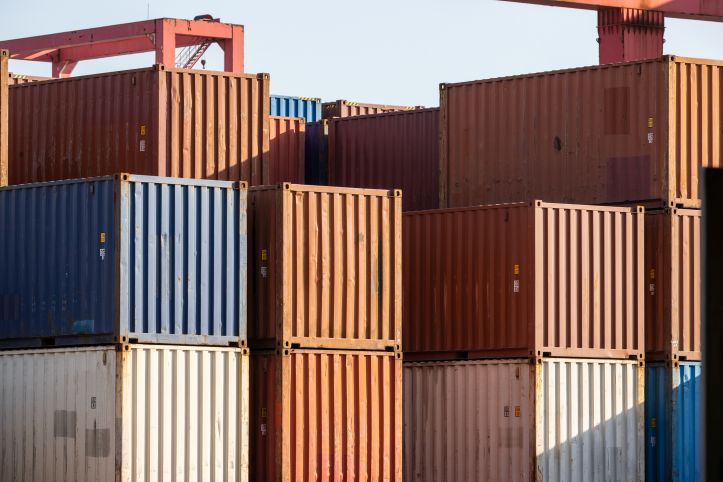
Container consolidation and the CTU Code: A guide to optimal loading
In foreign trade, container consolidation is no longer a task based solely on the intuition of stevedores, but has become a discipline of technological precision. The transport of goods in Cargo Transport Units (CTUs) is subject to dynamic forces that require a perfect balance between volume and weight, load compatibility, and a strategic operational sequence. Ignoring these variables not only leads to logistical inefficiency but also violates international safety and legal compliance under the SOLAS Convention and the CTU Code. In this context, the combination of human experience and digital transformation becomes indispensable for mitigating structural risks and ensuring efficient and safe cargo operations.
The CTU Code: The global standard for stowage
The IMO/ILO/UNECE Code of Practice for the Stowage of Transport Units (CTU Code) is the technical reference manual for any logistics professional. It is not optional; it is the foundation of stowage safety.
- Weight distribution: It specifies that the center of gravity must be correctly established according to the transport unit and kept within strict limits. Poor distribution compromises the stability of the ship and can cause road accidents due to axle overload.
- Securing the cargo: It establishes that the goods must be “blocked and lashed” to withstand dynamic forces.
- Responsibilities: Defines the responsibilities of the parties involved in the transport chain. The shipper is responsible for selecting the appropriate unit, communicating securing arrangements, and determining gross mass, among other critical tasks.
Legal Framework and Digitization
It is essential to understand that proper stowage and accurate weight declaration are not only operational requirements but also legal obligations under the SOLAS Convention. In this scenario, the use of software tools to predict mass distribution is essential to mitigate risks, as uneven distribution can lead to excessive stress on the structure and fastening failures. Digitizing the cargo planning process is a powerful ally when it comes to complying with regulations.
Digital planning with EasyCargo: From theory to practice
The CTU Code of Practice establishes a series of measures to consider during cargo planning that EasyCargo helps to implement:
- Unit selection: Choose the type of transport and test which is most suitable for the intended load.
- Stowage plan: Prepare a detailed stowage plan before the physical operation.
- Payload limits: Do not exceed the maximum gross mass authorized under the CSC Convention or national regulations.
The adoption of tools such as EasyCargo allows these weights and load distributions to be controlled and monitored, enabling efficient application of these regulations. The CTU Code ensures that a cargo unit does not become a “projectile” at sea or on the road; 3D load simulation software is the means to achieve this.
Container consolidation: The challenge of efficiency
A true logistics expert must comply with international regulations, but also achieve optimal profitability. Efficient consolidation is not simply about “filling the bucket,” but about balancing:
- Volume vs. weight: Maximize the use of cubic space without exceeding the gross weight limits allowed by the equipment and road regulations.
- Nature and compatibility of cargo: Organize stowage according to the strength of the packaging to prevent heavy loads from crushing light or fragile ones.
- Strategic operating sequence: Configure the loading order to streamline deconsolidation, avoiding unnecessary handling and reducing delivery times.
EasyCargo for strategic load planning
EasyCargo container load planning acts as a bridge between CTU Code theory and execution on the loading dock. It is not simply 3D container load visualization software; it is a calculation engine that optimizes space under safety parameters. Clearly, the use of 3D cargo simulation software does not replace a professional’s technical inspection, but it simplifies and speeds up the optimal planning of cargo distribution. Below, we will mention some of the most relevant benefits.
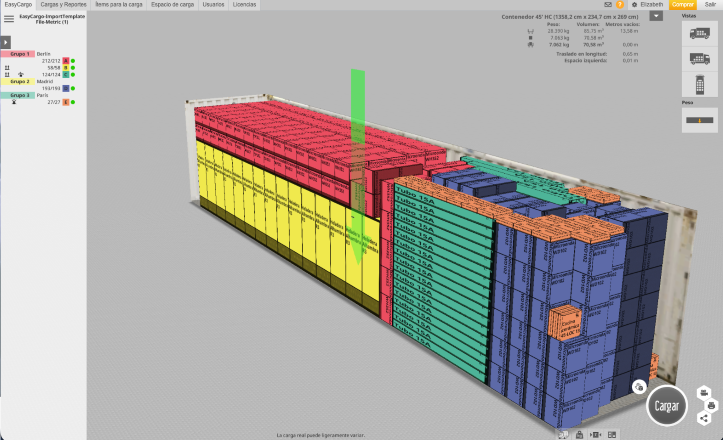
Benefits of planning container loads digitally
- 3D load simulation: keep the distribution of goods under control before loading.
- Choice of transport unit: The user has predefined cargo spaces and transport units at their disposal and can also edit the standardized spaces to create a customized cargo space.
- Center of mass and weight display: EasyCargo helps to drastically reduce initial manual planning errors, which can cause rejection at weighbridges (VGM).
- Calculation of axle load distribution: The software allows users to configure axle weight limits according to the regulations of the country of transit (e.g., NOM-012 in Mexico or Directive 96/53/EC in Europe).
- Division of cargo into priority groups: Allows cargo to be separated by type, customer, or multi-point deliveries, maintaining the safety and dynamic balance of the container at all times.
Digitizing stowage reduces human error and maximizes load capacity by an average of 15%, which directly translates into a reduction in cost per ton transported.
Digitizing your logistics is not just a safety measure; it is an investment in competitiveness. EasyCargo allows you to visualize, plan, and optimize your loads in minutes, immediately reducing operating costs and legal risks.
Are you ready to transform your load planning? Experience the precision of digital stowage. Try EasyCargo free for 10 days and discover how to optimize your containers with complete confidence and no obligation.